2012 · Hemodynamics & imaging
Ruptured status discrimination performance of aspect ratio, height/width, and bottleneck factor is highly dependent on aneurysm sizing methodology
Lauric A, Baharoglu MI, Malek AM.
Neurosurgery 71(1):38-45, 2012.
PMID 22353797 · DOI 10.1227/NEU.0b013e3182503bf9
In plain language
Researchers use many size and shape measures to describe brain aneurysms and relate them to rupture, but these are often defined in different ways. This study tested how much those definitions matter, using automatic 3D measurements of 134 aneurysms, 60 of them ruptured.
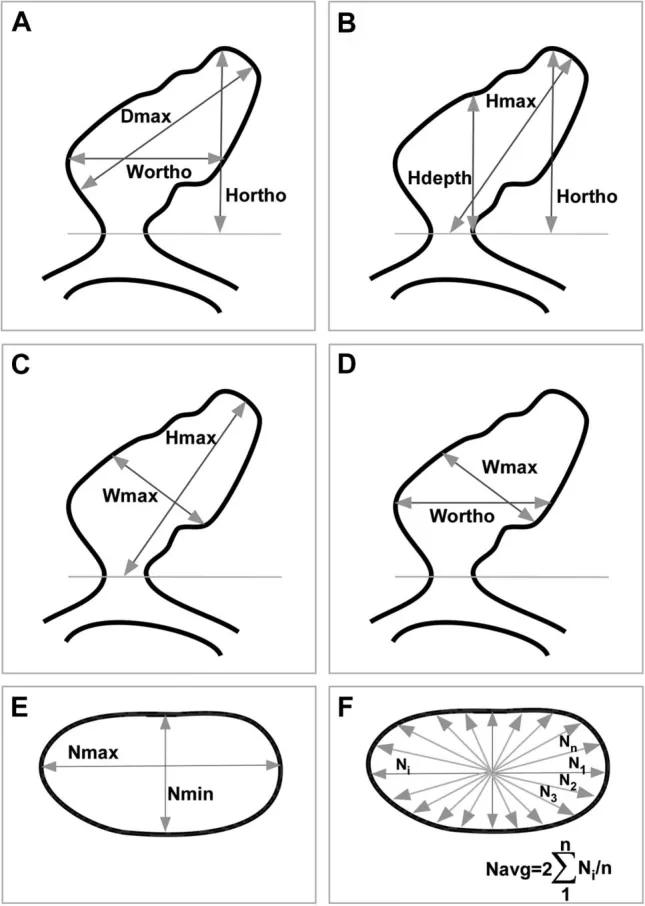
Height, width and neck size were each measured in several published ways, then combined into three common ratios. How well each ratio identified ruptured aneurysms varied widely with the definition used, for example from an area under the curve of 0.48 to 0.72 for height to width ratio (1.0 would be perfect).
The authors call for standard definitions so that results can be compared across studies.
A plain-language summary for patients and families. It is not medical advice, and individual results vary.
Abstract
Background
Numerous size and shape parameters have historically been used to describe cerebral aneurysms and to correlate rupture status. These parameters are often inconsistently defined.
Objective
To evaluate the impact of definition variation on rupture status detection performance.
Methods
Catheter rotational angiographic data sets of 134 consecutive aneurysms (60 ruptured) were automatically measured in 3 dimensions with a validated algorithm. According to the literature, aneurysm height was assessed as both maximal and orthogonal distances from dome to neck. Maximal and orthogonal widths were defined perpendicular to height definitions. Neck size was evaluated as minimum, maximum, and average diameter of the neck plane. Aspect ratio (AR; height/neck), height/width ratio (HW), and bottleneck factor (BNF; width/neck) were evaluated for alternative definitions of each size variable. Univariate statistics were used to identify significant features and to compute the area under the curve (AUC) of the receiver-operating characteristic.
Results
The AR, HW, and BNF showed significant dependence on parameter definition. Statistical significance and performance varied widely, depending on alternative definitions: AR, AUC range of 0.59 to 0.75; HW, AUC range of 0.48 to 0.72; and BNF, AUC range of 0.57 to 0.72. Using maximal height, orthogonal width, and minimum neck resulted in the best AR, HW, and BNF performances. Compared with HW, AR and BNF were less sensitive to alternative definitions.
Conclusion
Alternative aneurysm size definitions have a significant impact on prediction performance and optimal threshold values. Adoption of standard methodology and sizing nomenclature appears critical to ensure rupture detection performance and reproducibility across studies.
Abstract as indexed in PubMed (PMID 22353797). Copyright the publisher.
Cite this paper
Lauric A, Baharoglu MI, Malek AM. Ruptured status discrimination performance of aspect ratio, height/width, and bottleneck factor is highly dependent on aneurysm sizing methodology. Neurosurgery 71(1):38-45. 2012. doi:10.1227/NEU.0b013e3182503bf9 PMID: 22353797.