1994 · Mechanobiology
Endothelial expression of thrombomodulin is reversibly regulated by fluid shear stress
Malek AM, Jackman R, Rosenberg RD, Izumo S.
Circ Res 74(5):852-60, 1994.
PMID 8156632 · DOI 10.1161/01.res.74.5.852
In plain language
Thrombomodulin is a protein on the surface of endothelial cells, the cells that line vessels, that captures thrombin, a clotting enzyme, and switches on a natural anticlotting pathway. Little was known about how blood flow affects it.
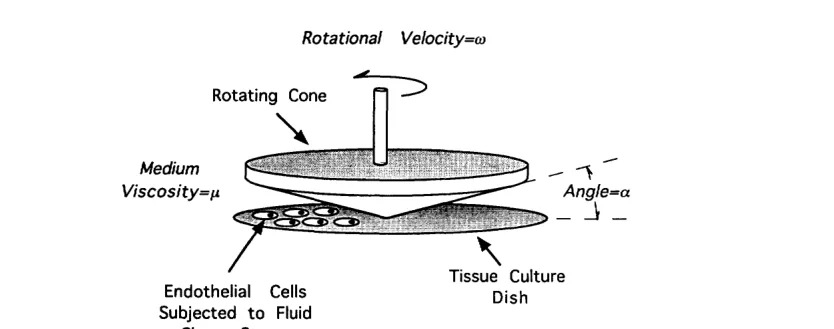
In laboratory experiments, cow aortic endothelial cells exposed to moderate (15 dynes/cm2) and elevated (36 dynes/cm2) shear stress, the rubbing force of flow, showed a mild brief rise and then a marked fall in thrombomodulin mRNA, to 37% and 16% of resting levels, respectively, by 9 hours. Low shear stress of 4 dynes/cm2 had no effect. Smooth muscle cells from the vessel wall showed no change and did not change shape or line up with the flow.
The flow response was specific to endothelial cells, and the title notes that it is reversible.
A plain-language summary for patients and families. It is not medical advice, and individual results vary.
Abstract
The vascular endothelium, by virtue of its position at the interface between blood and the vessel wall, is known to play a critical role in the control of thrombosis and fibrinolysis. Thrombomodulin (TM) is a surface receptor that binds thrombin and is a potent activator of the protein C anticoagulant pathway. Although TM expression is known to be regulated by various cytokines, little is known about its response to ever-present biomechanical stimuli. We have explored the role of fluid shear stress, imparted on the luminal surface of the endothelial cell as a result of blood flow, on the expression of TM mRNA and protein in both bovine aortic endothelial (BAE) and bovine smooth muscle (BSM) cells in an in vitro system. We report in the present study that TM expression is regulated by flow. Subjecting BAE cells to fluid shear stress in the physiological range of magnitude of 15 (moderate shear stress) and 36 (elevated shear stress) dynes/cm2 resulted in a mild transient increase followed by a significant decrease in TM mRNA to 37% and 16% of its resting level, respectively, by 9 hours after the onset of flow. In contrast, shear stress at the low magnitude of 4 dynes/cm2 did not affect TM mRNA levels. The sensitivity of TM mRNA expression by flow was found to be specific to endothelium, since it was not observed in BSM cells exposed to steady laminar shear stress of 15 dynes/cm2. Furthermore, unlike BAE cells, BSM cells did not exhibit altered cell shape nor align in the direction of flow after 24 hours of shear stress at 15 dynes/cm2.(ABSTRACT TRUNCATED AT 250 WORDS)
Abstract as indexed in PubMed (PMID 8156632). Copyright the publisher.
Cite this paper
Malek AM, Jackman R, Rosenberg RD, Izumo S. Endothelial expression of thrombomodulin is reversibly regulated by fluid shear stress. Circ Res 74(5):852-60. 1994. doi:10.1161/01.res.74.5.852 PMID: 8156632.