2013 · Devices & clinical
Effect of antiplatelet therapy on thromboembolism after flow diversion with the pipeline embolization device
Heller RS, Dandamudi V, Lanfranchi M, Malek AM.
J Neurosurg 119(6):1603-10, 2013.
PMID 23971953 · DOI 10.3171/2013.7.JNS122178
In plain language
The Pipeline Embolization Device is a flow-diverting stent, a fine mesh tube that redirects blood away from an aneurysm. Little was known about how often small clots form and travel into the brain during this procedure, or whether blood-thinning medication affects that.
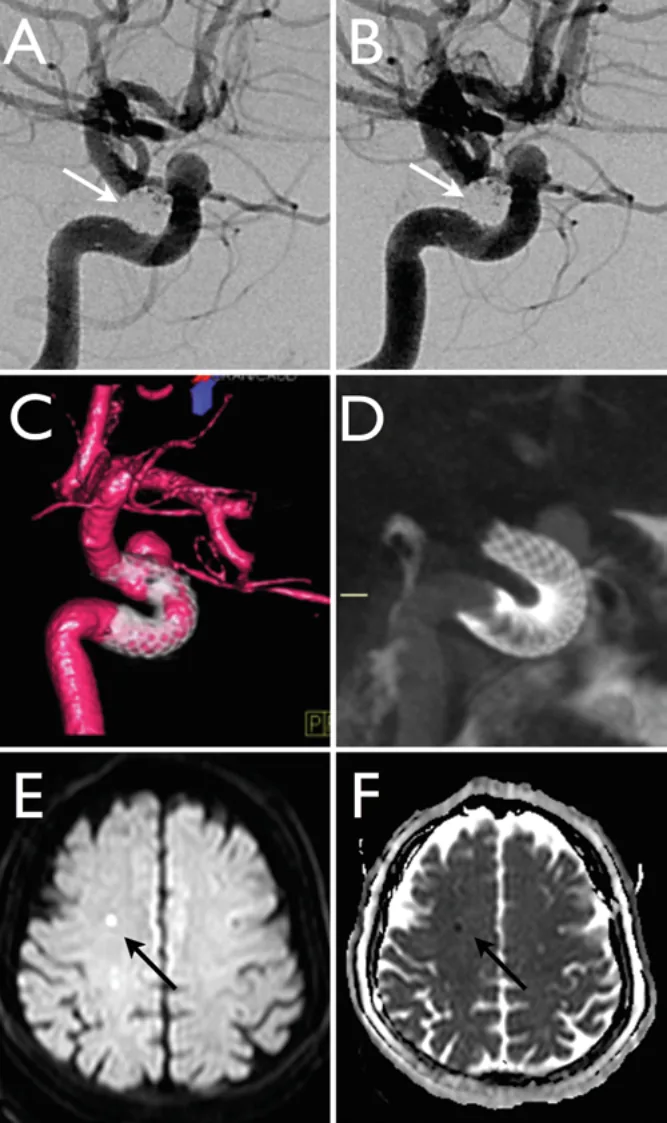
In 23 patients with 26 aneurysms, MRI within 24 hours showed small clot-related spots after 13 of 25 procedures (52%), all on the treated side. How strongly aspirin and clopidogrel were working, measured with platelet tests, did not differ between cases with and without these spots, nor did the degree of heparin effect during the procedure. Larger aneurysm size was the only factor linked to the clots.
These clots were more common than expected, and further work is needed on whether medication plans could lower complications.
A plain-language summary for patients and families. It is not medical advice, and individual results vary.
Abstract
Object
Flow-diverting stents offer a novel treatment approach to intracranial aneurysms. Data regarding the incidence of acute procedure-related thromboembolic complications following deployment of the Pipeline Embolization Device (PED) remain scant. The authors sought to determine the rate of embolic events in a bid to identify potential risk factors and assess the role of platelet inhibition.
Methods
Data in all patients receiving a PED for treatment of an intracranial aneurysm were prospectively maintained in a database. Diffusion-weighted 3-T MRI was performed within 24 hours of PED deployment. The incident rate of procedural embolism was established, and univariate analysis was then performed to determine any associations of embolic events with measured variables. The degree of platelet inhibition in response to aspirin and clopidogrel was evaluated by challenging the platelet samples with arachidonic acid and adenosine diphosphate, respectively, and then performing formal light transmission platelet aggregometry.
Results
Twenty-three patients with 26 aneurysms were eligible for inclusion in the study. Thirty-one PEDs were deployed in 25 procedures. All ischemic lesions detected on diffusion-weighted 3-T MRI were identified as embolic based on their location and distribution, with none appearing to be due to perforator artery occlusion. Procedural embolic events were found in the target parent vessel territory in 13 (52%) of 25 procedures, with no patients harboring lesions contralateral to the deployed PED. The number of embolic events per procedure ranged from 3 to 16, with a mean of 5.4. There was no significant difference between cases with and without procedural embolism in platelet inhibition by aspirin (mean 15% vs 12% residual activation; p = 0.28), platelet inhibition by clopidogrel (mean 41% vs 41% residual activation; p = 0.98), or intraprocedural heparin-induced anticoagulation (mean activated clotting time 235 seconds vs 237 seconds; p = 0.81). By multivariate analysis, the authors identified larger aneurysm size (p = 0.03) as the single variable significantly associated with procedural embolism. There was no significant relationship between aneurysm size and the number of embolic events (p = 0.32) or the total burden of the embolism lesion area (p = 0.53).
Conclusions
Acute embolism following use of the PED for treatment of intracranial aneurysms is more common than hypothesized. The only identifiable risk factor for embolism appears to be greater aneurysm size, perhaps indicating significant disturbed flow across the aneurysm neck with ingress and egress through the PED struts. The strength of antiplatelet therapy, as measured by residual platelet aggregation, did not appear to be associated with cases of procedural embolism. Further work is needed to determine the implications of these findings and whether anticoagulation regimens can be altered to lower the rate of complications following PED deployment.
Abstract as indexed in PubMed (PMID 23971953). Copyright the publisher.
Cite this paper
Heller RS, Dandamudi V, Lanfranchi M, Malek AM. Effect of antiplatelet therapy on thromboembolism after flow diversion with the pipeline embolization device. J Neurosurg 119(6):1603-10. 2013. doi:10.3171/2013.7.JNS122178 PMID: 23971953.