2011 · Hemodynamics & imaging
3D shape analysis of intracranial aneurysms using the writhe number as a discriminant for rupture
Lauric A, Miller EL, Baharoglu MI, Malek AM.
Ann Biomed Eng 39(5):1457-69, 2011.
PMID 21225345 · DOI 10.1007/s10439-010-0241-x
In plain language
Many brain aneurysms are now found by chance on scans, and doctors need better ways than size alone to judge which might rupture. This study introduced new shape measures based on the writhe number, a mathematical way to describe how a surface twists and curves.
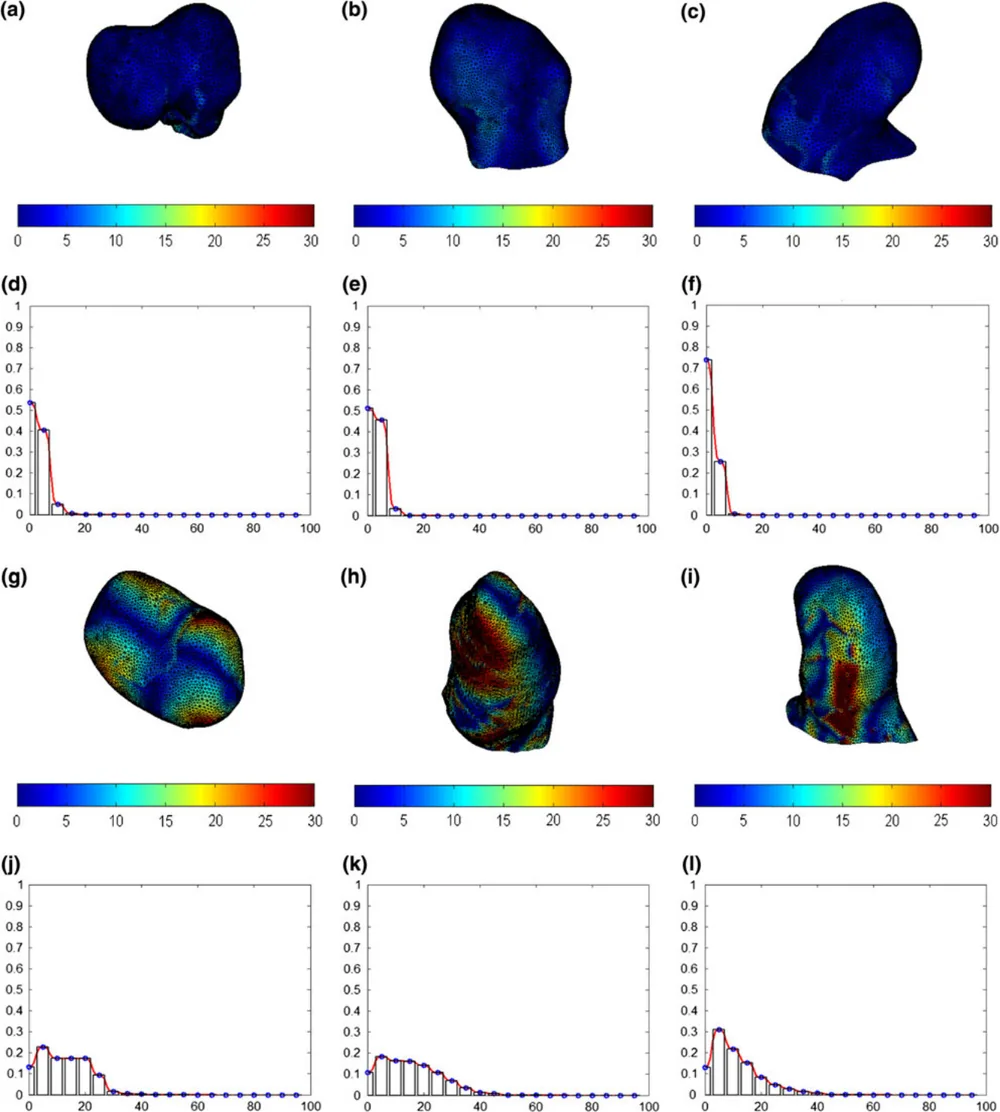
In 117 aneurysms (52 ruptured, 65 unruptured), sidewall aneurysms and bifurcation aneurysms (those at a branch point) were best described by different sets of shape measures. The method identified rupture status with 86.7% accuracy in sidewall and 71.2% accuracy in bifurcation aneurysms, a 12% gain over seven established size and shape measures.
This kind of shape analysis may one day help assess rupture risk.
A plain-language summary for patients and families. It is not medical advice, and individual results vary.
Abstract
Intracranial aneurysms are polymorphic focal arterial dilations, which harbor a variable risk of rupture leading to high morbidity and mortality. Increased detection of incidental aneurysms by non-invasive imaging has created a need for rupture risk stratification tools, in addition to simple aneurysm size, to guide optimal treatment strategy. To this end, shape analysis has emerged as a possible differentiator of rupture likelihood. A novel set of morphological parameters based on the writhe number are introduced here to describe aneurysms and discriminate rupture status. Classification in 117 saccular aneurysms (52 ruptured and 65 unruptured) is based on statistical analysis of writhe number distribution on the aneurysm surface. Aneurysms are analyzed both in isolation and including a portion of their parent vessel. Sidewall and bifurcation aneurysm subtypes were found to be best described by disjoint sets of shape parameters, yielding a morphological dichotomy between the two aneurysm classes. Writhe number analysis results in 86.7% accuracy on sidewall (SW) aneurysms and 71.2% accuracy on bifurcation (BF) aneurysms. This represents a 12% accuracy increase for both subtypes compared to the performance of seven established 2D and 3D indexes. The results support the utility of writhe number aneurysm shape analysis, with potential clinical value in rupture risk stratification.
Abstract as indexed in PubMed (PMID 21225345). Copyright the publisher.
Cite this paper
Lauric A, Miller EL, Baharoglu MI, Malek AM. 3D shape analysis of intracranial aneurysms using the writhe number as a discriminant for rupture. Ann Biomed Eng 39(5):1457-69. 2011. doi:10.1007/s10439-010-0241-x PMID: 21225345.