1998 · Mechanobiology
Mannitol at clinical concentrations activates multiple signaling pathways and induces apoptosis in endothelial cells
Malek AM, Goss GG, Jiang L, Izumo S, Alper SL.
Stroke 29(12):2631-40, 1998.
PMID 9836777 · DOI 10.1161/01.str.29.12.2631
In plain language
Mannitol is a drug that draws fluid out of tissues. It is widely used to reduce brain swelling, limit muscle damage in compartment syndrome and improve kidney blood flow, but its direct effects on endothelial cells, the cells that line blood vessels, were poorly understood.
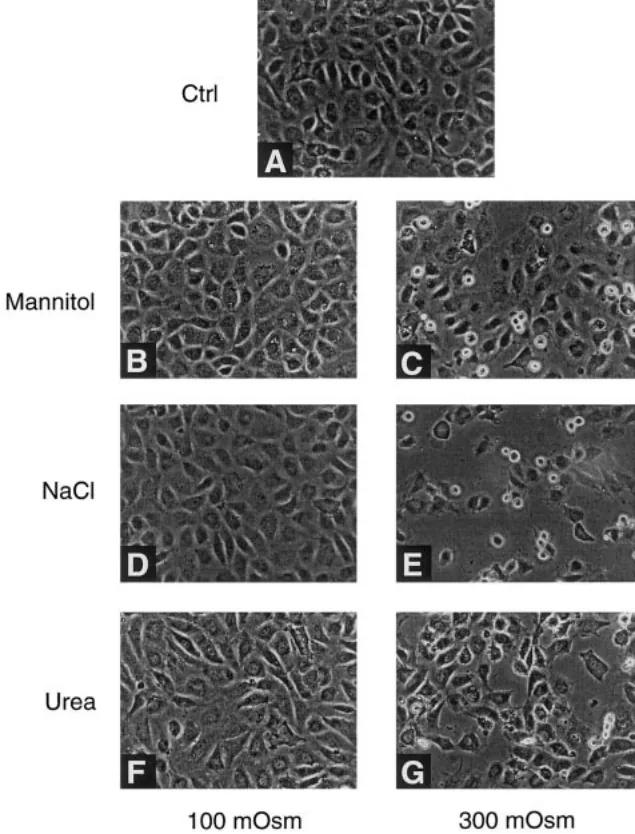
In laboratory tests on cow aortic endothelial cells, concentrated solutions of mannitol, salt and urea all increased apoptosis, a form of programmed cell death. With mannitol, 42% of cells died this way at 300 mOsm, compared with 1.2% of untreated cells. Mannitol also switched on several stress signals inside the cells and raised their calcium levels. Blocking calcium, tyrosine kinases (signal-relaying enzymes) or new protein production reduced the cell death.
The authors suggest that clinical use of mannitol may directly harm the vessel lining.
A plain-language summary for patients and families. It is not medical advice, and individual results vary.
Abstract
Background and purpose
Hyperosmotic mannitol therapy is widely used in the clinical setting for acute and subacute reduction in brain edema, to decrease muscle damage in compartment syndrome, and to improve renal perfusion. Though beneficial rheological effects commonly are attributed to mannitol, its direct effects on endothelial cells are poorly understood.
Methods
We studied the effect of hypertonic and hypotonic stress on bovine aortic endothelial (BAE) cells, using mannitol, urea, and sodium chloride and medium dilution in vitro.
Results
Exposure to incremental osmolar concentrations of 300 mOsm of each osmotic agent increased apoptosis in BAE cells (mannitol congruent withNaCl>urea). Induced programmed cell death was detected by DAPI staining of intact cell nuclei, and by TUNEL and DNA fragmentation ladder assays. Mannitol-induced apoptosis exhibited dose dependence (42% of cells at 300 mOsm [P<0.0001] compared with 1.2% of control cells) and was also observed in bovine smooth muscle cells. Mannitol-induced apoptosis was attenuated approximately 50% in the presence of cycloheximide or actinomycin D. Hypertonic mannitol and NaCl, but not urea, increased tyrosine phosphorylation of the focal adhesion contact-associated proteins paxillin and FAK. Hypotonic medium, which did not lead to apoptosis, increased protein tyrosine phosphorylation of FAK but not of paxillin. Addition of mannitol or NaCl also produced sustained increases in c-Jun NH2-terminal kinase (JNK) activity. In addition, hypertonic mannitol increased intracellular free [Ca2+] in a dose-dependent manner. Chelation of intracellular Ca2+ with quin2-AM (10 micromol/L) inhibited mannitol-induced apoptosis approximately 50%, as to a lesser extent did inhibition of tyrosine kinase activity with herbimycin (1 micromol/L).
Conclusions
We have shown that hypertonic mannitol exposure induces endothelial cell apoptosis, accompanied by activation of tyrosine and stress kinases, phosphorylation of FAK and paxillin, and elevation of intracellular free [Ca2+]. The apoptosis is attenuated by inhibition of transcription or translation, by inhibition of tyrosine kinases, or by intracellular Ca2+ buffering. These data suggest that clinical use of the osmotic diuretic mannitol may exert direct deleterious effects on vascular endothelium.
Abstract as indexed in PubMed (PMID 9836777). Copyright the publisher.
Cite this paper
Malek AM, Goss GG, Jiang L, Izumo S, Alper SL. Mannitol at clinical concentrations activates multiple signaling pathways and induces apoptosis in endothelial cells. Stroke 29(12):2631-40. 1998. doi:10.1161/01.str.29.12.2631 PMID: 9836777.