2008 · Devices & clinical
Aneurysmal subarachnoid hemorrhage: update for emergency physicians
Edlow JA, Malek AM, Ogilvy CS.
J Emerg Med 34(3):237-51, 2008.
PMID 18155383 · DOI 10.1016/j.jemermed.2007.10.003
In plain language
Aneurysmal subarachnoid hemorrhage, bleeding around the brain from a burst aneurysm, is a serious form of stroke that affects 30,000 patients in North America each year. Because symptoms vary widely, it is missed in a significant proportion of cases. Headache may be the only sign, and the neurological exam may be normal.
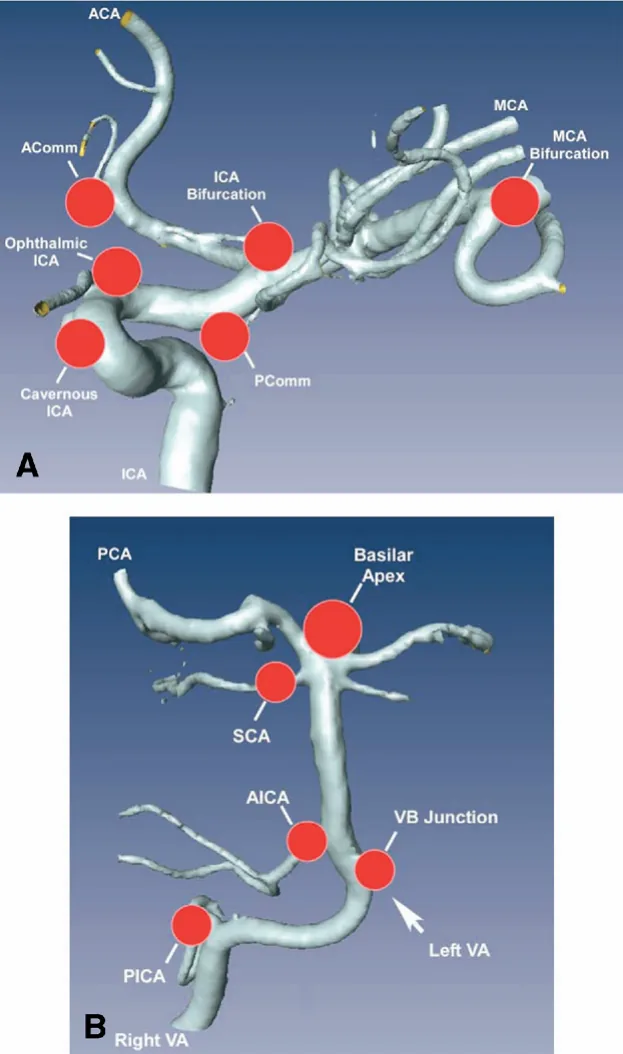
This review for emergency physicians covers the two main tests, a CT scan and a lumbar puncture (spinal tap), and the limits of each. For example, CT becomes less sensitive as time passes after symptoms begin. It also discusses imaging to locate the aneurysm and early management.
The authors note that sending patients to centers offering the full range of neurosurgical and endovascular treatments leads to better outcomes.
A plain-language summary for patients and families. It is not medical advice, and individual results vary.
Abstract
Aneurysmal subarachnoid hemorrhage (SAH) is a serious cause of stroke that affects 30,000 patients in North America annually. Due to a wide spectrum of presentations, misdiagnosis of SAH has been reported to occur in a significant proportion of cases. Headache, the most common chief complaint, may be an isolated finding; the neurological examination may be normal and neck stiffness absent. Emergency physicians must decide which patients to evaluate beyond history and physical examination. This evaluation - computed tomography (CT) scanning and lumbar puncture (LP) - is straightforward, but each test has important limitations. CT sensitivity falls with time from onset of symptoms and is lower in mildly affected patients. Traumatic LP must be distinguished from true SAH. Cerebrospinal fluid analysis centers on measuring xanthochromia. Debate exists about the best method to measure it - visual inspection or spectrophotometry. An LP-first strategy is also discussed. If SAH is diagnosed, the priority shifts to specialist consultation and cerebrovascular imaging to define the offending vascular lesion. The sensitivity of CT and magnetic resonance angiography are approaching that of conventional catheter angiography. Emergency physicians must also address various management issues to treat or prevent early complications. Endovascular therapy is being increasingly used, and disposition to neurovascular centers that offer the full range of treatments leads to better patient outcomes. Emergency physicians must be expert in the diagnosis and initial stabilization of patients with SAH. Treatment in a hospital with both neurosurgical and endovascular capability is becoming the norm.
Abstract as indexed in PubMed (PMID 18155383). Copyright the publisher.
Cite this paper
Edlow JA, Malek AM, Ogilvy CS. Aneurysmal subarachnoid hemorrhage: update for emergency physicians. J Emerg Med 34(3):237-51. 2008. doi:10.1016/j.jemermed.2007.10.003 PMID: 18155383.