2006 · Devices & clinical
Preoperative embolization of hypervascular spinal metastases using percutaneous direct injection with n-butyl cyanoacrylate: technical case report
Schirmer CM, Malek AM, Kwan ES, Hoit DA, Weller SJ.
Neurosurgery 59(2):E431-2; author reply E431-2, 2006.
PMID 16883157 · DOI 10.1227/01.NEU.0000223503.92392.CE
In plain language
Some cancers that spread to the spine are packed with blood vessels, so surgery to remove them can cause heavy bleeding. Embolization, a procedure that blocks a tumor's blood supply before surgery, can help reduce this.
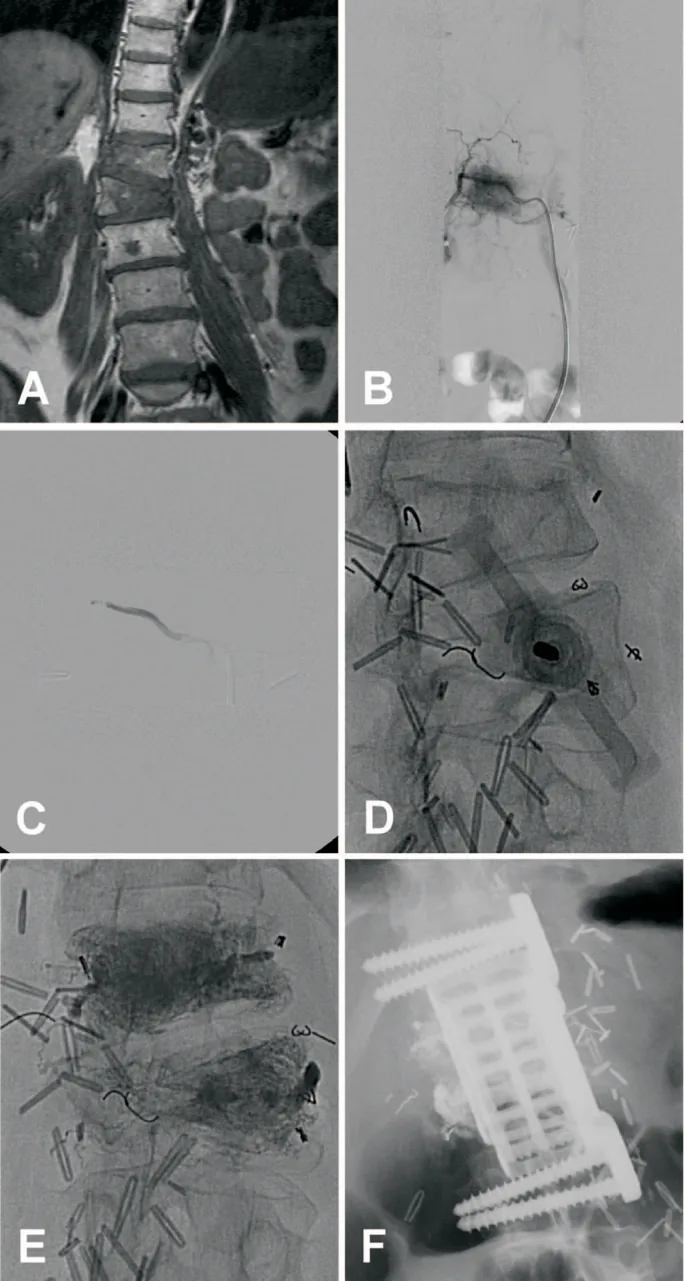
This report describes five patients with kidney cancer that had spread to the spine. In addition to the usual embolization through the arteries, the team injected a liquid glue called n-butyl cyanoacrylate, mixed with an oil that shows up on X-ray, directly into the affected vertebrae through a needle in the skin. The procedure worked in all cases without neurological or medical complications. During the later surgery, blood loss was lower than expected and the tumor was easier to handle.
The authors suggest this added step can make these operations safer.
A plain-language summary for patients and families. It is not medical advice, and individual results vary.
Abstract
Objective
Intraoperative blood loss constitutes a major cause of perioperative morbidity in surgical decompression and reconstruction of highly vascular spinal metastatic tumors. We propose a technique for embolization of highly vascular vertebral metastases using percutaneous direct injection using n-butyl cyanoacrylate (NBCA) instead of polymethylmethacrylate to complement preoperative transarterial embolization and to minimize operative blood loss.
Methods
Five patients with renal cell carcinoma metastases to the spine (one cervical, one thoracic, and three lumbar) underwent embolization by percutaneous direct injection of the affected vertebrae with a mixture of NBCA and iodized oil to supplement transarterial embolization with polyvinyl alcohol particles and fibered platinum coils. This was achieved via a transpedicular approach in four cases and by direct vertebral body puncture in one case.
Results
The percutaneous NBCA direct injection procedure was technically successful in all cases and was not associated with neurological or medical complications. All patients underwent subsequent vertebrectomy and spinal instrumentation. Surgical resection was performed with lower than expected blood loss and with a subjective improvement in tumor tissue handling and dissection.
Conclusion
The extent of tumor devascularization can be improved by supplementing transarterial embolization with NBCA direct injection to decrease operative blood loss and increase the safety of surgical resection and stabilization of highly vascular spinal metastases.
Abstract as indexed in PubMed (PMID 16883157). Copyright the publisher.
Cite this paper
Schirmer CM, Malek AM, Kwan ES, Hoit DA, Weller SJ. Preoperative embolization of hypervascular spinal metastases using percutaneous direct injection with n-butyl cyanoacrylate: technical case report. Neurosurgery 59(2):E431-2; author reply E431-2. 2006. doi:10.1227/01.NEU.0000223503.92392.CE PMID: 16883157.