1989 · Devices & clinical
Functional electrical stimulation of the latissimus dorsi muscle for use in cardiac assist
Malek AM, Mark RG.
IEEE Trans Biomed Eng 36(7):781-8, 1989.
PMID 2787286 · DOI 10.1109/10.32111
In plain language
One idea for helping a failing heart is to use a person's own skeletal muscle as an extra pump. This engineering study focused on the latissimus dorsi, a large back muscle, and compared two ways of electrically stimulating it through its nerve: electrodes wrapped around the nerve (nerve cuff electrodes) and electrodes placed inside the muscle (intramuscular electrodes).
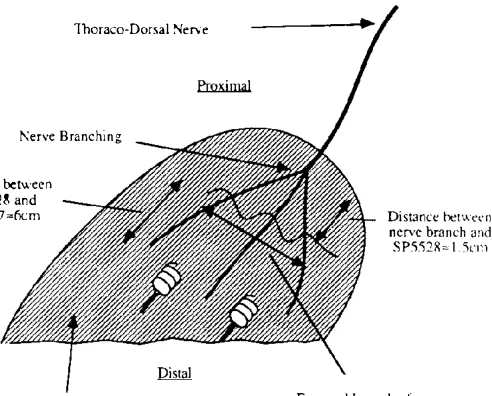
After the electrodes were implanted, the muscle was stimulated for two months so that it would change into fatigue-resistant fibers. It was then shaped into a pumping chamber, attached to a fluid load and tested. Nerve cuff electrodes needed less stimulation to activate the muscle, recruited more of it and used less energy at full activation, while intramuscular electrodes were more mechanically stable and more consistent over time.
The results point to a tradeoff between the two electrode types.
A plain-language summary for patients and families. It is not medical advice, and individual results vary.
Abstract
Direct and nondirect nerve stimulation modes of the thoraco-dorsal nerve (TDN) leading to the latissimus dorsi muscle (LDM) were evaluated by using nerve cuff electrodes (NCE) and intramuscular electrodes (IME), respectively. Following electrode implantation, the LDM was chronically stimulated for two months to induce muscle transformation to oxidative, fatigue-resistant type I muscle fibers. Threshold and impedance values were measured regularly to establish the stability of the implants. The LDM was then dissected, shaped into a ventricle, subjected to a hydraulic load and stimulated using a controlled-voltage pulse-train stimulator with adjustable parameters. Electrical input and hydraulic output variables were measured to obtain the recruitment characteristics and to compare the efficiency of the two types of electrodes. Results indicate a tradeoff between the NCE's lower threshold, higher recruitment, and lower energy consumption at saturation, and the IME's greater mechanical stability and better long-term reproducibility.
Abstract as indexed in PubMed (PMID 2787286). Copyright the publisher.
Cite this paper
Malek AM, Mark RG. Functional electrical stimulation of the latissimus dorsi muscle for use in cardiac assist. IEEE Trans Biomed Eng 36(7):781-8. 1989. doi:10.1109/10.32111 PMID: 2787286.